

This October marks ten years since Westwood Energy was founded. A decade is a meaningful milestone for any business, but particularly in an industry that has changed as dramatically as solar has over that period.
When Westwood started in 2016, commercial solar was still viewed by many businesses primarily as a sustainability investment. Today, the conversation is very different. Energy costs, resilience, grid constraints, electrification and decarbonisation have moved energy much further up the boardroom agenda. Solar is no longer simply about doing something positive for the environment. For many organisations, it has become a serious piece of long-term infrastructure.
Westwood has grown alongside that change.

Our first project: A something in somewhere.
Ten years of doing commercial solar properly
Westwood was established with a simple objective: to deliver commercial solar projects properly. That might sound obvious, but it has shaped the way the business has developed.
Rather than chasing growth at any cost, Westwood has remained technically led, placing a strong emphasis on good engineering, quality installation and looking after customers long after a system has been commissioned.
That approach has helped build a business where much of our work has historically come through repeat customers and referrals.
For us, that is probably one of the strongest measures of success.
A solar installation is expected to remain on a customer’s building for decades. The relationship between installer and customer should therefore extend well beyond the day the system is switched on.
The projects have changed too
Over the last ten years, the size and complexity of the projects Westwood delivers have grown significantly. We have worked across agriculture, manufacturing, retail, education, leisure, garden centres and other commercial and industrial environments.
At one end of the spectrum, that might mean helping a rural business reduce the cost of electricity consumed during normal operations.
At the other, it can involve integrating several megawatts of generation into a large, live industrial site where electrical infrastructure, fire strategy, insurance requirements, roof construction and operational disruption all need to be considered.
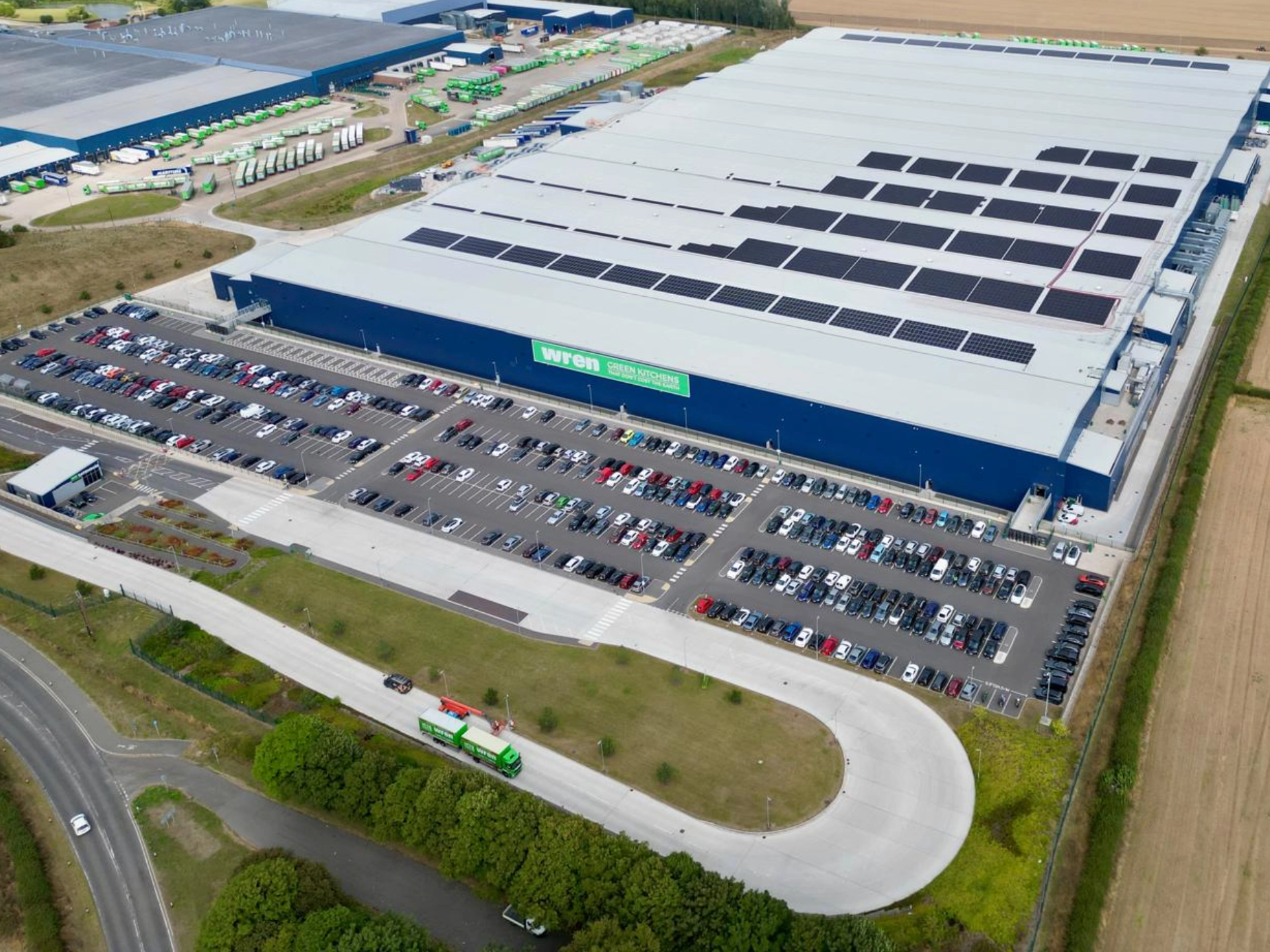
One of the clearest examples of that evolution is our current work with Wren Kitchens, where Westwood is delivering an approximately 5.9MW rooftop solar installation at its manufacturing facility.
More than 13,000 solar panels will ultimately form part of a system designed to make a significant contribution to the electricity used by the site.
A project of that scale is very different from many of the systems Westwood was delivering ten years ago, but the principles behind it remain the same: understand the site, engineer the system properly and deliver something that will perform for the long term.
Solar has become more sophisticated
The technology has evolved enormously too.
Panels are more powerful. Monitoring is more sophisticated. Inverter technology has improved. Battery storage is becoming increasingly relevant. Businesses are paying much closer attention to fire safety, insurance requirements and the interaction between solar and the wider electrical infrastructure of a building.
Customers are also becoming more informed.
The question is no longer simply:
“How many solar panels can we fit on the roof?”
A good commercial solar project starts with much broader questions:
- How does the business use electricity?
- When does it use it?
- What is it paying for that electricity?
- What proportion of solar generation can be consumed on site?
- What constraints exist around the roof, grid connection or electrical infrastructure?
- Could battery storage become relevant?
- What does success actually look like for the customer?
The best system is not necessarily the biggest system. It is the one designed around the needs of the business underneath it.
Looking after systems for the long term
Another area becoming increasingly important to Westwood is what happens after installation; after all, solar assets are expected to operate for 25 years or more. They therefore need to be monitored, maintained and managed properly throughout their life.
Westwood already supports more than 100 sites through service-level arrangements, and over the coming years we intend to build a much more structured asset-management and O&M offering.
That means helping customers with planned maintenance, system monitoring, inspections, fault diagnosis, performance analysis and optimisation.
For us, this is a natural extension of the way Westwood has always approached projects.
Installing the system should be the beginning of the relationship, not the end.
The next ten years
Reaching ten years gives us an opportunity to look back, but we are much more interested in what comes next.
Westwood remains an independent business with ambitious plans for growth.
We want to deliver larger and more technically challenging commercial and industrial solar projects.
We want to deepen relationships with customers operating multiple sites.
We want to expand our asset-management capability and create long-term partnerships with the businesses whose energy infrastructure we support.
And we want to continue developing the people, processes and technical capability required to grow without losing the things that built Westwood in the first place.
Because scale only matters if quality scales with it.
Over the last decade, technologies have changed, electricity markets have changed and the reasons businesses invest in solar have changed.
Our underlying philosophy hasn’t: Do good work. Look after customers. Keep improving.
Ten years in, that remains a pretty good foundation for the next ten.
Westwood: the power is in the detail.
